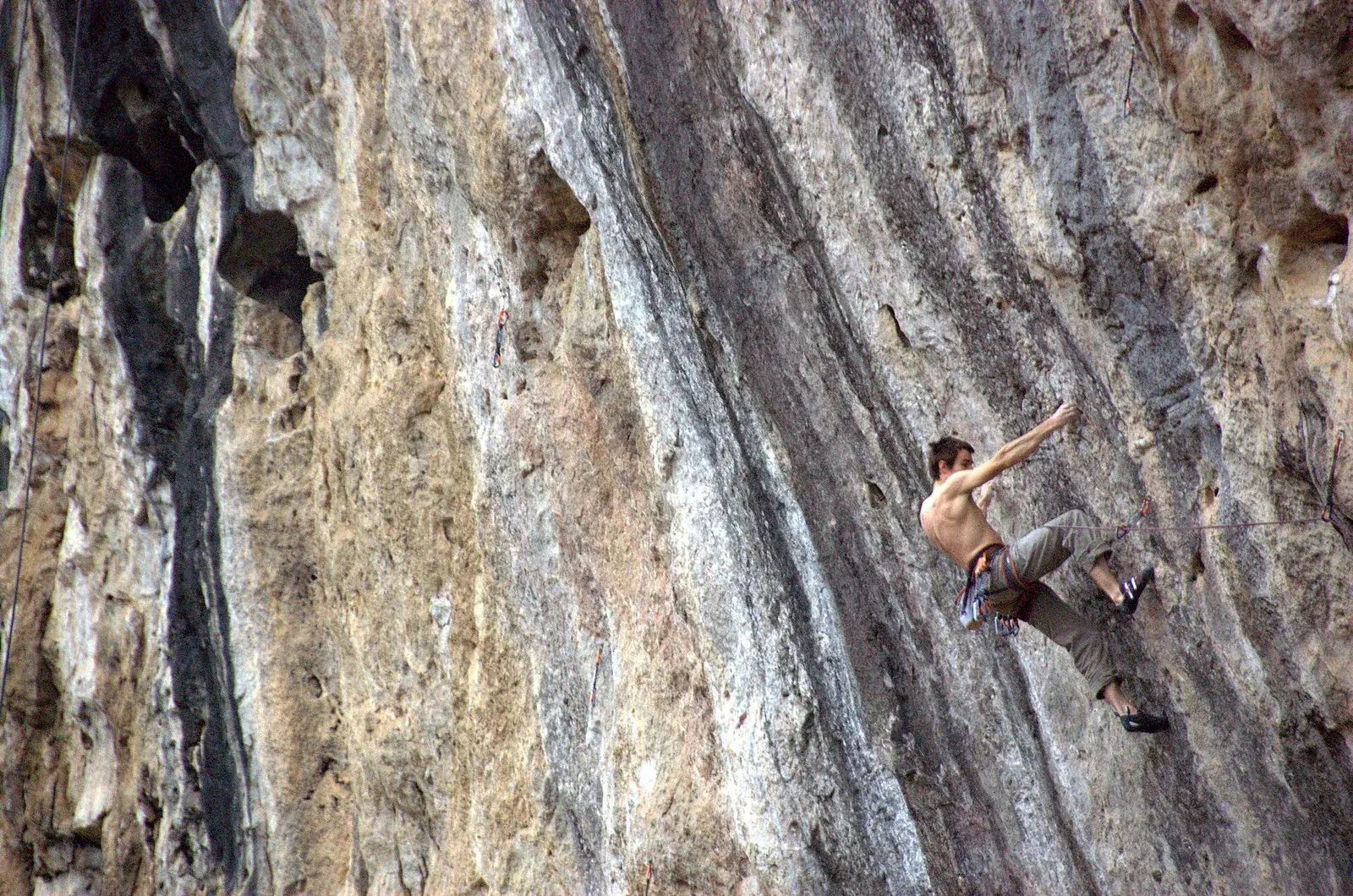
Whose land is it?
Most crags are on or reached through farmland, village land or private plots. The fact that a path exists does not mean you have a right to use it. If a farmer waves you through, thank them. If a gate is closed, close it again.
Parking is a common source of friction. Do not block field entrances, lanes or houses. Ask at the nearest house if you are unsure, and be prepared to walk a little further.
Grades and guidebooks
Yangshuo uses French sport grades, and the grading is generally honest. A 6a here may feel harder than a 6a at a soft crag elsewhere, especially on steep, pocketed limestone. Do not argue with the guidebook on your first day.
Guidebooks go out of date. Routes are added, rebolted and occasionally removed. Ask locally about new sectors and changed anchors. If you are developing a route, do it with the established local community, not on your own.
At the crag
Keep noise down, especially near villages. Do not play music at the base. Clean up chalk, tape and food waste. Do not leave ropes hanging on routes overnight unless you have permission.
If someone is projecting a route, give them space and do not rush to get on it. If you are climbing slowly, let faster parties pass. The crag is a shared space, not a gym.
Cleaning and bolting
Do not chip holds, remove vegetation or add bolts without local agreement. Yangshuo’s climbing community has worked for years to maintain access and quality. Unauthorised development can undo that work quickly.
If you see damaged hardware, report it. If you want to contribute, join a local clean-up or bolt-fund event. The best way to keep climbing here is to be useful, not just visible.
Questions
Practical notes
Do you need permission to climb in Yangshuo?
Access varies by crag. Some areas require a small fee or permission from the landowner. Ask locally and respect any closure.
Can you camp at the crags?
No. Camping is not appropriate at most crags. Stay in a guesthouse and leave the site as you found it.