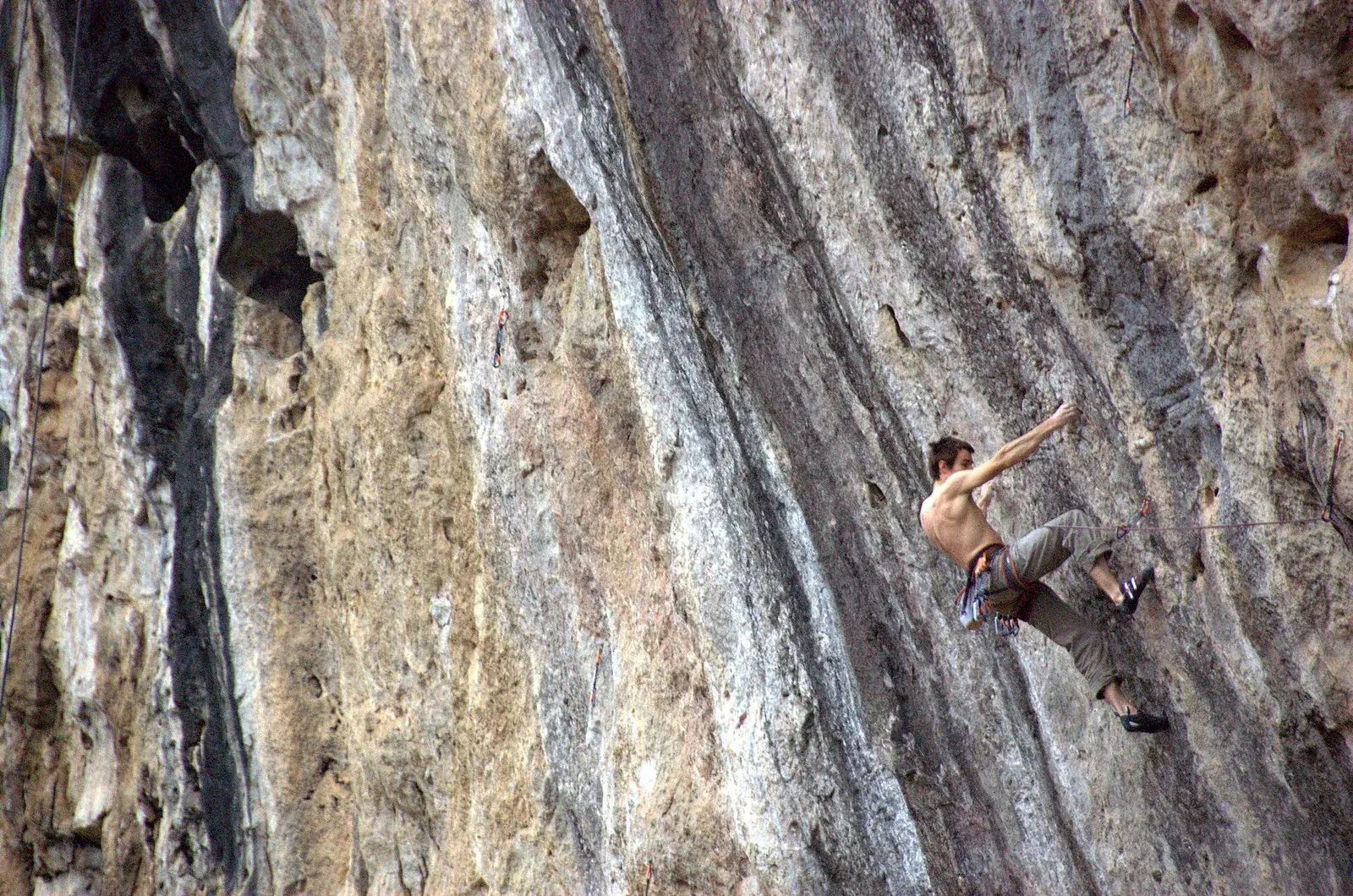
A different scale
White Mountain is one of the taller crags in the valley. The routes are long, sustained and often technical, with fewer of the huge holds that make Leipishan feel forgiving. It rewards footwork and endurance.
Because it is further from town, it gets fewer casual visitors. The atmosphere is quieter, and you are more likely to have a route to yourself. That also means fewer people around if something goes wrong.
The climbing
Most routes are in the middle grades, with a handful of harder lines. The rock is generally solid, but limestone can be polished on popular routes and loose in places after heavy rain. Wear a helmet at the base and be careful with rope management on long pitches.
Some lines require a 70-metre rope or careful lowering. Check the guidebook and the route length before you set off. Do not assume that every anchor is equipped for a comfortable lower-off.
Conditions and approach
The approach takes fifteen to twenty-five minutes, depending on the sector, with a steep section and some loose ground. It is not a casual walk in flip-flops. Carry water and a headlamp if you are climbing late.
The wall can be hot in the afternoon and slow to dry after rain. Spring and autumn are the best seasons. In summer, start at first light and be off the wall before the heat peaks.
Who it suits
White Mountain suits climbers who are comfortable leading, can manage their own gear and want longer routes. It is not the best choice for a first outdoor day or for a group with mixed experience.
If you are visiting without a partner, a local guide can arrange a day here. If you are new to the area, ask about current access and any changed anchors before you commit to a route.
Questions
Practical notes
Do you need a 70 m rope at White Mountain?
For some routes, yes. Check the guidebook and route length. A 60 m rope is not enough for every line.
Is White Mountain good for a rest day?
No. It is a climbing crag, not a viewpoint. If you want a rest day, go to the river or the villages.