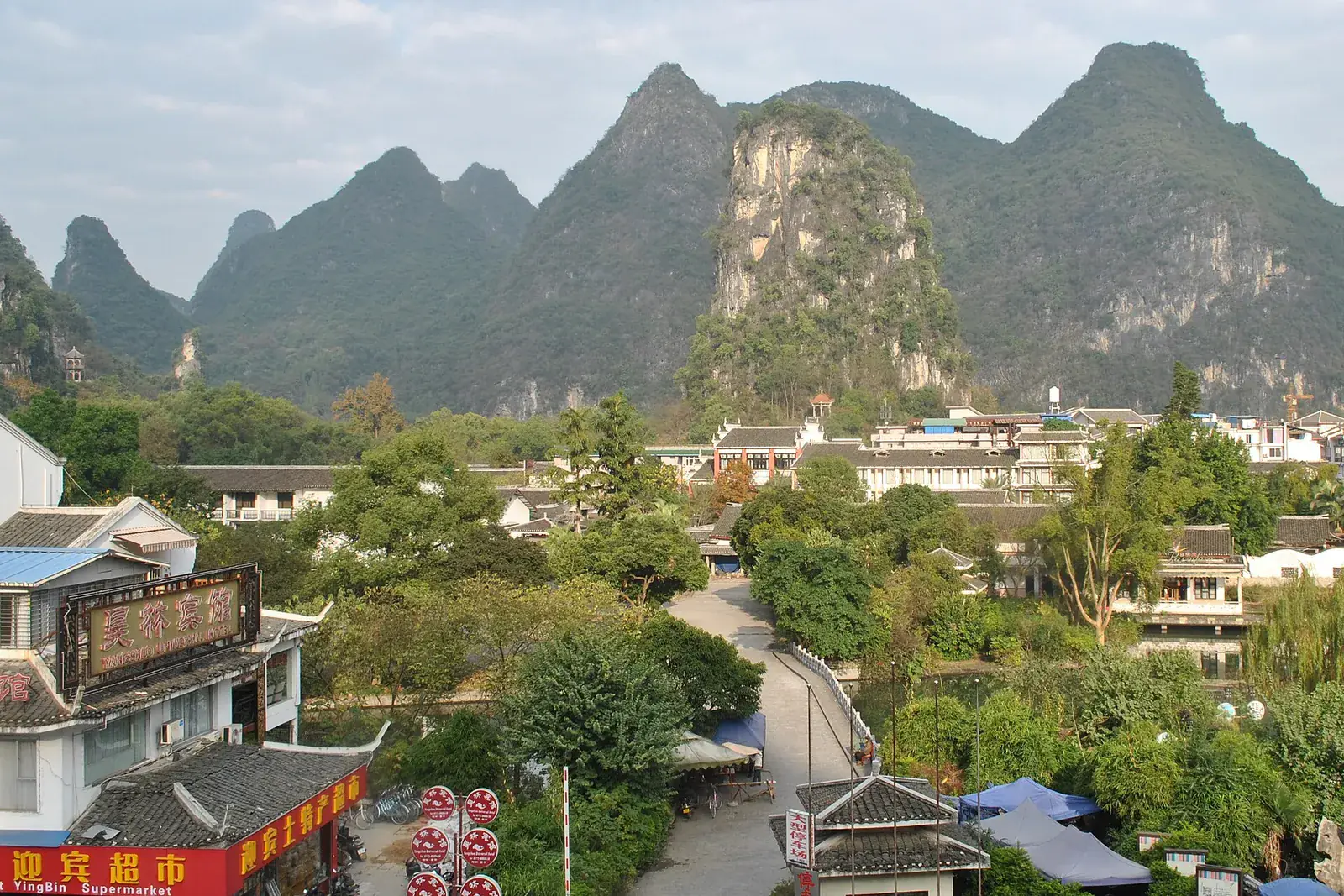
A house built for the weather
The traditional village house here is a response to heat, humidity and heavy rain. Deep eaves keep the sun off the walls and the rain away from the foundations. Small windows reduce solar gain. Thick brick walls provide thermal mass, and timber upper floors allow ventilation.
The roof is usually pitched and covered in grey clay tiles, with generous overhangs. The ridge may be decorated, but the main decorative effort goes into the door frame, the threshold and the carved brackets under the eaves.
The courtyard
Many houses are arranged around a small courtyard, which brings light and air into the centre of the plan while keeping the street facade relatively closed. The courtyard is also a working space: washing, drying, cooking and storage.
The entrance is often offset rather than facing the street directly, a common feng shui arrangement intended to control the flow of energy and provide privacy. You will see stone thresholds, screen walls and changes in floor level.
What to look for
Walk slowly and look up. The best details are above eye level: carved lintels, roof brackets, ventilation slots, old paint and the way tiles overlap. Look down too: stone thresholds, drainage channels and worn steps tell you how the house is used.
Newer buildings often mix concrete, tile and brick. That is not a failure of taste; it is what people can afford and maintain. The interesting architecture is the older layer, not a judgement on the newer one.
Visiting old houses
Most old houses are private homes. Do not walk in uninvited, even if the door is open. A courtyard may look empty and still be someone’s kitchen. Ask before photographing, and leave if you are asked to.
Some guesthouses have restored old buildings and are open to visitors who buy a drink or a meal. That is a better way to see the interiors than treating a family home as a museum.
Questions
Practical notes
Are the old houses protected?
Some are, but many are not. Restoration is expensive, and new construction is often cheaper. The surviving old buildings are a fragile resource.
Can you stay in a traditional house?
Yes. Several guesthouses in Jiuxian and around the Yulong valley occupy restored courtyard buildings.