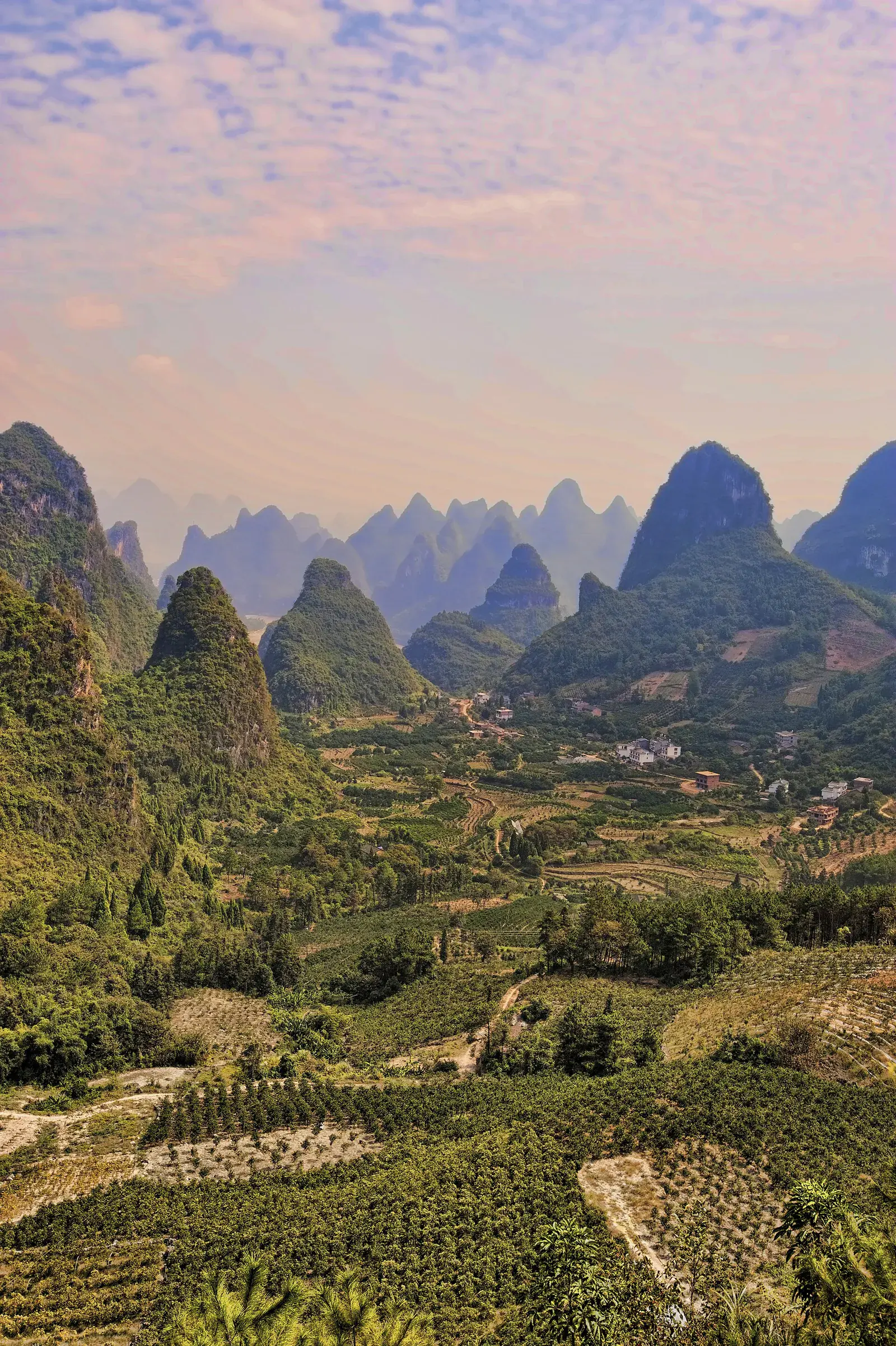
Thin soil, wet feet
The valley floor is a patchwork of small fields separated by paths, irrigation channels and limestone outcrops. The soil is thin and seasonally waterlogged, which suits rice but not large-scale mechanised farming.
Farmers work small plots, often by hand or with two-wheel tractors. Buffalo are still used in some fields. The result is a landscape of tiny paddies and vegetable beds, each at a different stage of growth.
What grows
Rice is the staple, but the valley also produces maize, sweet potato, taro, peanuts, soybeans and a wide range of leafy greens. Bamboo shoots are important in spring. Citrus, especially kumquats, is a cash crop in the north.
The river provides fish, snails and shrimp, though wild stocks are under pressure. Pork and chicken are the main meats. Tofu is made locally and appears at almost every meal.
The seasonal table
Spring is about shoots, greens and fresh herbs. Summer brings tomatoes, aubergine, corn and beans. Autumn is rice harvest, taro and citrus. Winter is preserved vegetables, pickles, dried meat and hot pots.
This is why a restaurant menu in January looks different from one in July, even if the printed list has not changed. Ask what is fresh. The answer is usually the best thing to order.
Eating with the season
The most useful question at a village restaurant is not what is good, but what came in today. Point at what other tables are eating. Order one vegetable, one tofu or meat dish and rice, then add more if you are still hungry.
Do not expect a farm-to-table narrative. The food is local because it is cheaper and fresher, not because it is a marketing concept. That is exactly what makes it worth eating.
Questions
Practical notes
Is the food organic?
Much of it is grown without synthetic inputs, but not certified organic. Ask if this matters to you, and accept that the answer may be informal.
What is the local speciality?
Beer fish is the famous dish. Rice noodles, stuffed snails, bamboo shoots and pickled vegetables are more everyday.