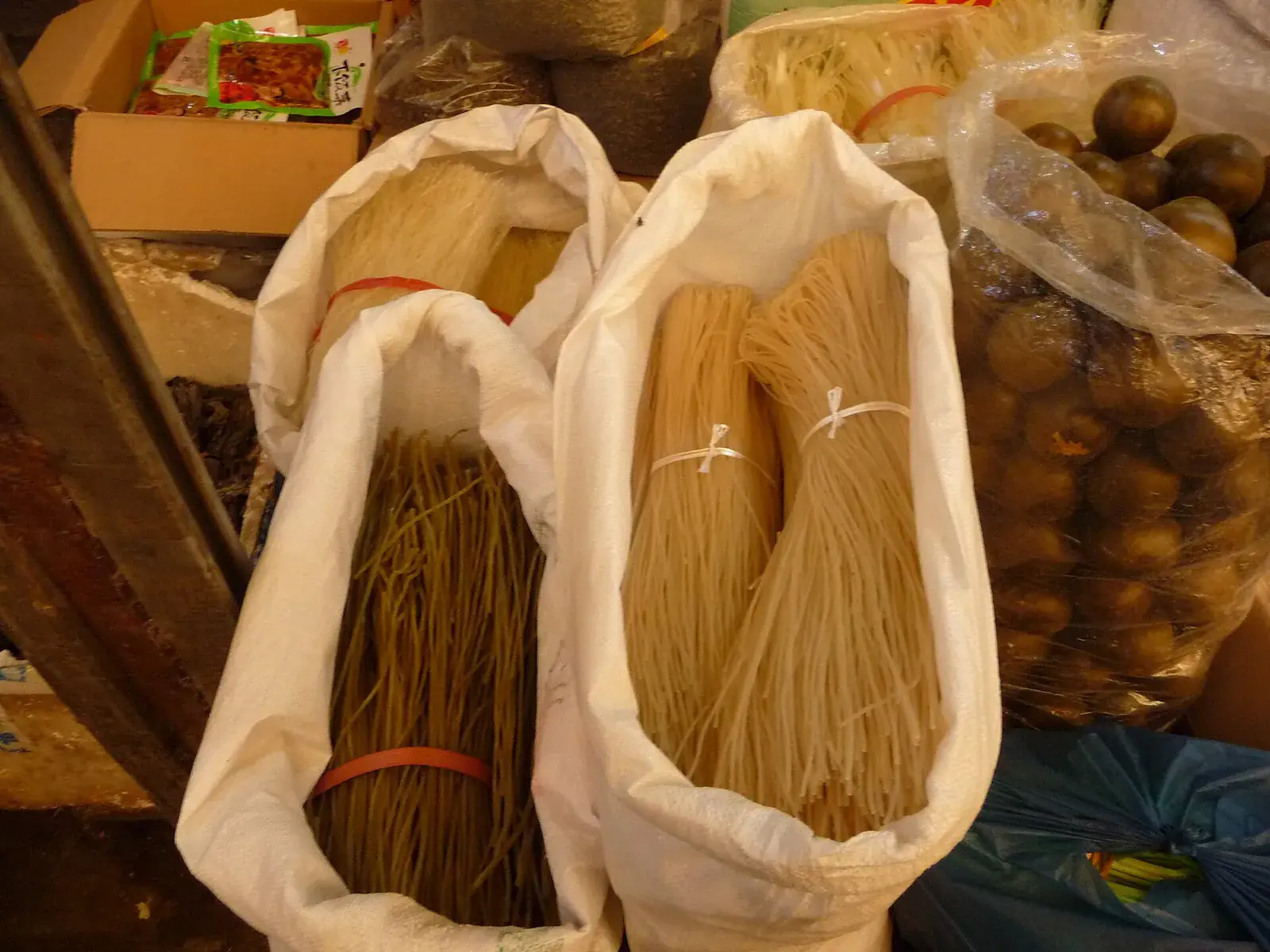
What you will see
The market is a mix of produce, prepared food and household goods. You will find greens, bamboo shoots, tomatoes, taro, citrus, dried chillies, tofu, pickles, live fish and cuts of meat. Some stalls sell cooked noodles or fried snacks.
The variety changes with the season. In autumn, the fruit stalls are at their best. In spring, the greens are the attraction. Do not expect everything to be available all year.
How to buy
Watch the locals first. They will pick up produce, smell it, ask a question and negotiate. You do not need to bargain hard for a handful of fruit, but you should know the price before you agree.
Bring small notes and a bag. Some stalls accept mobile payment; others prefer cash. Do not handle produce you are not going to buy, and do not open sealed packages.
Etiquette
Ask before photographing people, especially at close range. A market is a workplace, not a photogenic set. If someone says no, put the camera away.
Do not block the aisle to compose a shot. Buy something if you have spent time at a stall. A little courtesy goes a long way.
What to do with your purchases
If you are staying somewhere with a kitchen, buy fruit and pickles for breakfast. If not, buy what you can eat immediately: mandarins, bananas, roasted chestnuts, a bag of noodles.
A market visit is also a good way to start a cooking day. The private village-kitchen experience begins here, choosing vegetables that will be cooked an hour later.
Questions
Practical notes
Which market is best?
The main market in Yangshuo town is convenient. Baisha has a more local market atmosphere. Arrive early for the best produce and the most activity.
Can you pay by card?
Some stalls accept mobile payment, but cash is more reliable. Carry small notes.