Two rivers, two different trips
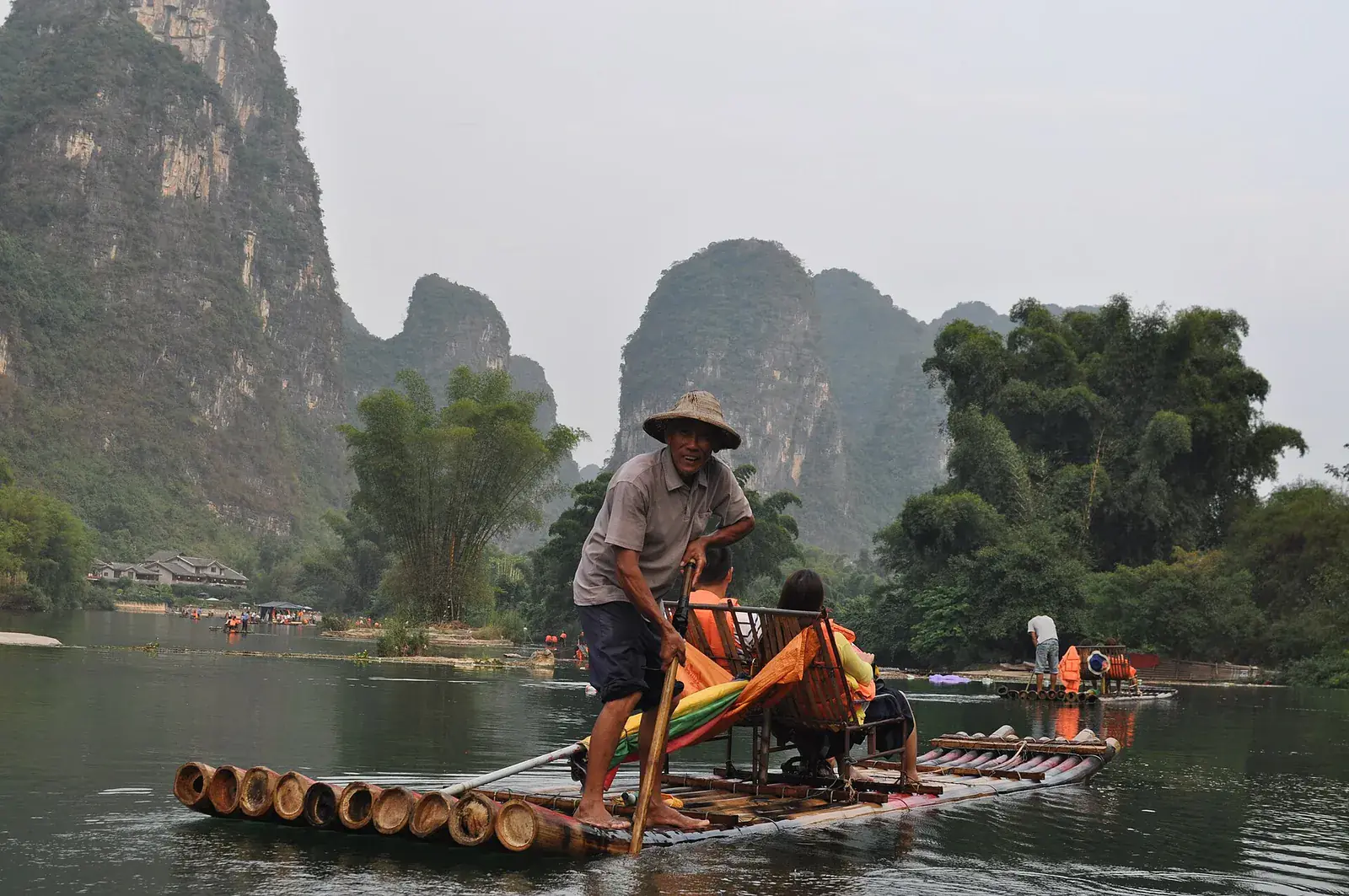
The Yulong is the small, shallow river east of town: narrow channels, bamboo, farmhouses, old bridges and low weirs. Rafts here are poled by a boatman, usually two passengers per raft, and the pace is slow enough to hear the water.
The Li is the big river: wide, deep, busy, and the landscape everybody recognises. The rafts on the Xingping stretch are motorised and carry several passengers. It is less intimate than the Yulong, but the scale of the peaks is the point.
The Yulong: which stretch
The classic run is between Jinlong Bridge and Gongnong Bridge, through the middle of the valley. It takes roughly an hour and a half, passes several weirs, and is the most popular section for good reason: the scenery is the valley at its best.
Shorter sections exist upstream and downstream, and some are quieter. If you are staying near Xingping or in the east bank villages, ask whether a local stretch is running. The ticket windows at the bridges sell official tickets; the touts working the car parks do not.
The Li at Xingping
From Xingping, motorised rafts run downstream towards Nine Horse Fresco Hill, the stretch printed on the twenty-yuan note. The trip is around an hour, depending on water and stops, and runs in both directions along the same scenery.
It is a shared experience: tour boats, other rafts, loudspeakers. Go at the first slot in the morning for mist and fewer boats, or late in the afternoon for side light. The middle of the day is a convoy.
Prices and tickets
Raft prices are set by the operators and change with the section and the season. Expect a few hundred yuan per raft on the Yulong, sold for two passengers, and a per-seat price on the Li that is lower per person but adds up for a family.
Buy at the official ticket window at the bridge or jetty, and check exactly what is included: the ride, life jackets, and whether a return transfer is part of the deal. If someone offers to skip the queue for cash, walk on. Prices are posted; ask to see the board.
Weather, water and children
Rafting stops when the river runs too high or too fast after heavy rain. This is a safety rule, not an inconvenience to negotiate. In summer, afternoon storms can close the river with little notice; book the morning if your schedule is tight.
Life jackets are compulsory and worth wearing properly. At the weirs the raft drops a short distance and can ship water, so keep phones and cameras in a dry bag. Operators set their own age and height limits for children; ask before you pay, not at the water.
How to avoid the worst of it
The first rafts leave around eight and the last ones around five, with the heaviest flow between ten and two; hours shift with the season. Weekdays are calmer than weekends, and the weeks around Chinese public holidays are the busiest of the year.
If you only have one morning, take the earliest slot and eat breakfast afterwards. The valley at eight is worth more than the same valley at eleven, and you will have the river more or less to yourself.
Questions
Practical notes
Yulong River or Li River raft?
Yulong for a quiet, poled ride through farmland and weirs; the Li at Xingping for the big classic landscape and the twenty-yuan view. If you have time for one, choose by whether you want intimacy or scale.
How long is a bamboo raft trip?
Roughly 60–90 minutes on the Yulong depending on the section, and about an hour on the Li at Xingping. Allow extra time for transfers and queues.
Is bamboo rafting safe?
It is a routine, well-run activity, and life jackets are provided. The main risks are sun, splashes at the weirs and slippery steps at the jetties. Follow the boatman's instructions and keep valuables dry.
Can I take photos on the raft?
Yes, but use a dry bag and a wrist strap. The raft is stable in flat water and wet at the weirs, and phones go overboard more often than you would think.